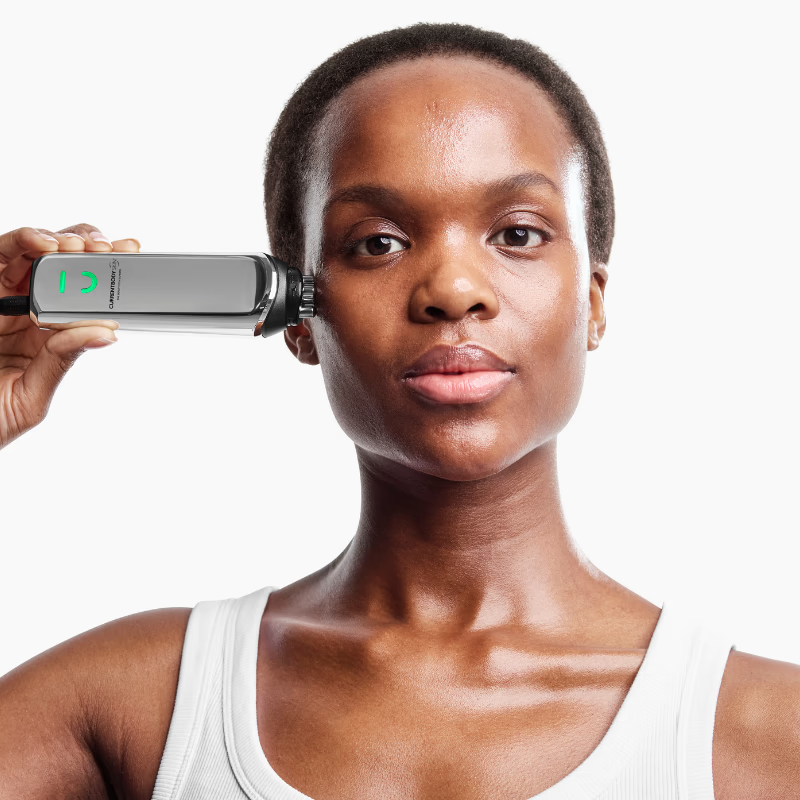
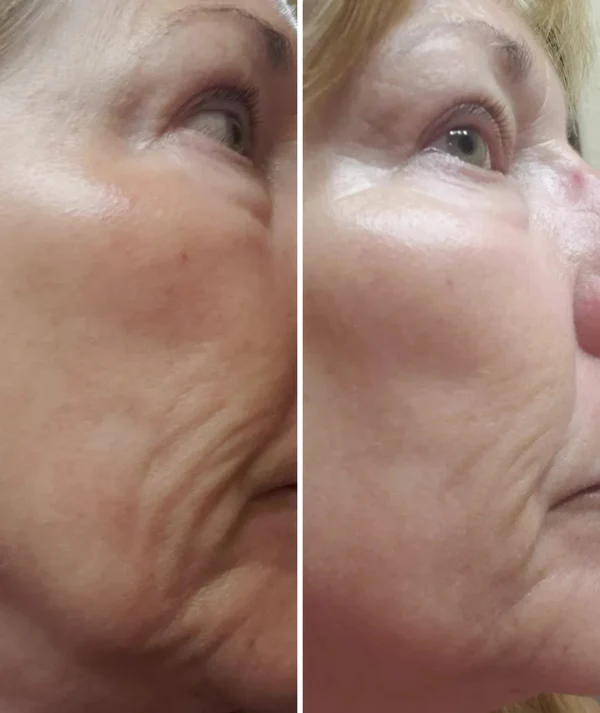
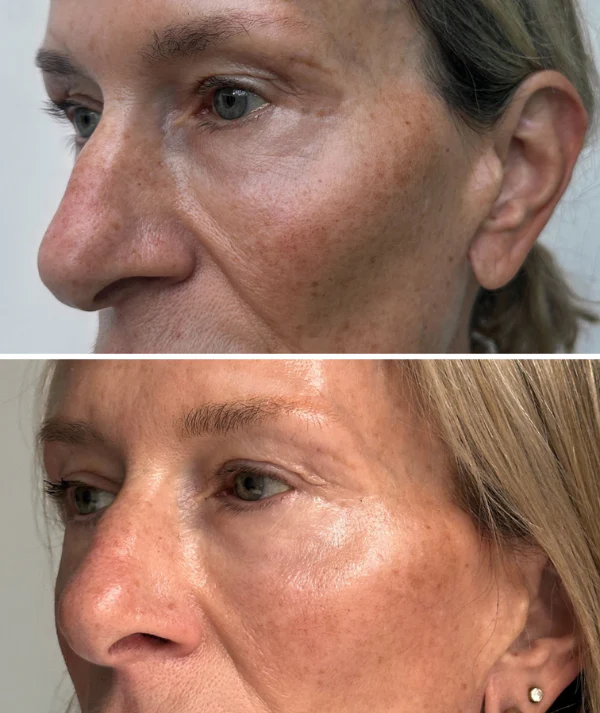
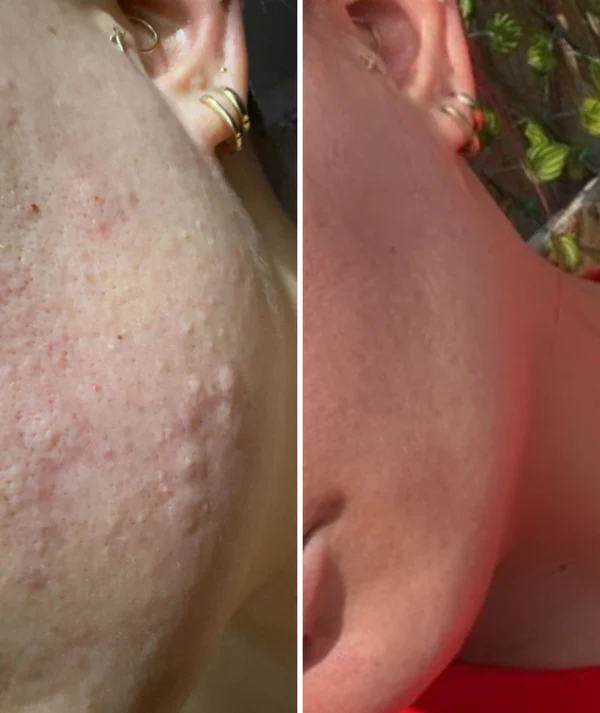


The jawline can have a major influence on the overall appearance of the face. As skin and facial structures change with age, some people begin to notice reduced definition around the lower face, softer-looking contours or loose-looking skin extending towards the neck.
This has increased interest in professional jawline skin tightening treatments that do not involve surgery.
Modern beauty and aesthetic clinics can offer several technologies as part of lower-face rejuvenation programmes. Radio frequency is commonly associated with non-invasive firmness-focused treatments, while RF microneedling may be considered where texture and other visible ageing concerns are also present. LED light therapy can play a complementary role within broader skin rejuvenation programmes.
However, no machine can guarantee a dramatically sculpted jawline for every client.
Understanding why the jawline changes, what different technologies actually do and what results are realistic can help clients and UK clinics make better treatment decisions.
Why Does the Jawline Change With Age?
A less defined jawline is not necessarily caused by one factor.
Age-related changes can affect the appearance of the:
- Skin
- Facial structure
- Lower face
- Neck
- Fat distribution
- Overall facial contours
Skin also undergoes natural changes in collagen and elastin over time, which can affect firmness and elasticity, jawline skin tightening.
Other influences may include:
- Genetics
- Sun exposure
- Weight changes
- Lifestyle
- Smoking
- Skincare habits
- Natural ageing
This means professional jawline skin tightening should begin with identifying the actual concern rather than automatically recommending the same treatment to every client.
Is Loose Skin Causing a Less Defined Jawline?
Sometimes, but not always.
Loose-looking skin may contribute to reduced definition around the lower face. However, jawline appearance can also be influenced by underlying facial structure and other age-related changes.
This distinction matters.
A device designed around skin firmness cannot necessarily address every reason a jawline appears less defined.
Professional consultation should therefore determine whether the client’s main concern involves skin laxity, texture, general ageing or another factor before recommending treatment.
Our Loose Skin Treatment – Best Non-Surgical Options for Face and Neck guide explores skin laxity in greater detail.
Can You Tighten the Jawline Without Surgery?
Non-surgical technologies may be incorporated into programmes focused on improving the appearance of skin firmness around the lower face.
These treatments can be attractive to clients who:
- Prefer non-surgical options
- Want limited downtime
- Are noticing early signs of ageing
- Want to maintain skin appearance
- Are interested in gradual rejuvenation
However, non-surgical treatments should not be presented as equivalent to surgical lifting.
The potential suitability of jawline skin tightening depends partly on how significant the client’s concerns are.
Realistic expectations are essential.
Radio Frequency for the Jawline
Radio frequency is one of the main technologies associated with non-invasive professional skin tightening.
Professional Radio Frequency equipment delivers RF energy to targeted tissue, producing controlled thermal effects according to the treatment protocol.
For lower-face treatments, RF may be incorporated into programmes focused on:
- Skin firmness
- Jawline appearance
- Lower-face rejuvenation
- Facial ageing
- Face and neck treatments
Practitioners need to understand the specifications and operating protocols of the particular RF equipment being used.
Read our Radio Frequency Skin Tightening UK – Complete Professional Clinic Guide for a detailed explanation of RF technology.
How Does RF Jawline Treatment Work?
Radio frequency technology uses electromagnetic energy rather than LED light.
Professional RF equipment is designed to create controlled heating within targeted tissue.
Treatment variables can include:
- Energy level
- Temperature
- Treatment time
- Applicator movement
- Treatment area
- Equipment design
- Client response
Practitioners should follow the protocols appropriate to their particular equipment.
When considering jawline skin tightening, the quality of the treatment cannot be judged solely by how hot the skin feels or how powerful the machine appears.
More energy does not automatically mean a better treatment.
RF Microneedling for the Lower Face
Professional RF Microneedling combines controlled microneedling with radio frequency energy.
Specialised needles enter the skin at selected depths while RF energy is delivered according to the equipment settings.
RF microneedling may be considered when a client’s rejuvenation concerns extend beyond firmness to include areas such as:
- Skin texture
- Fine lines
- Visible ageing
- Certain types of scarring
- Overall skin quality
Because the treatment involves controlled needle penetration, it is more invasive than standard external RF.
Practitioner training, hygiene, client selection and aftercare are therefore particularly important.
Our RF Microneedling UK – Benefits, Results and Professional Clinic Guide provides more information, non-surgical jawline tightening.
Standard RF vs RF Microneedling for the Jawline
Both treatments use radio frequency energy, but they should not be treated as identical.
Standard Radio Frequency
Standard RF is non-invasive and is commonly incorporated into firmness-focused facial programmes.
RF Microneedling
RF microneedling combines needle penetration with radio frequency and may be selected where the treatment objectives also involve texture or more advanced rejuvenation.
For jawline skin tightening, the appropriate technology depends on the client’s skin, treatment goals, tolerance for downtime and professional assessment.
The more invasive option is not automatically the better option, non-surgical jawline tightening.
Can LED Light Therapy Help the Jawline?
LED light therapy works differently from radio frequency.
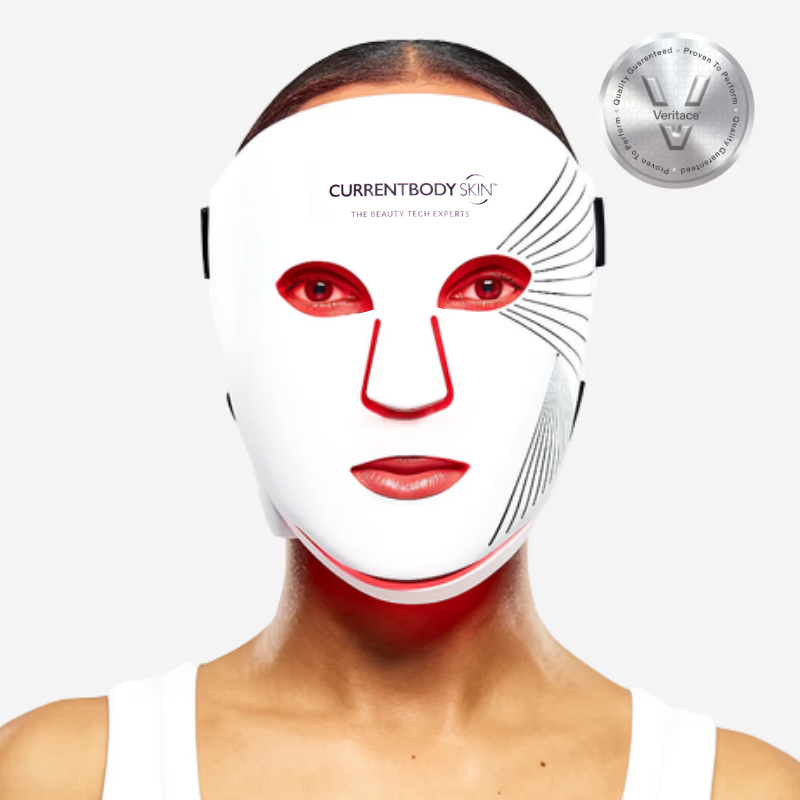
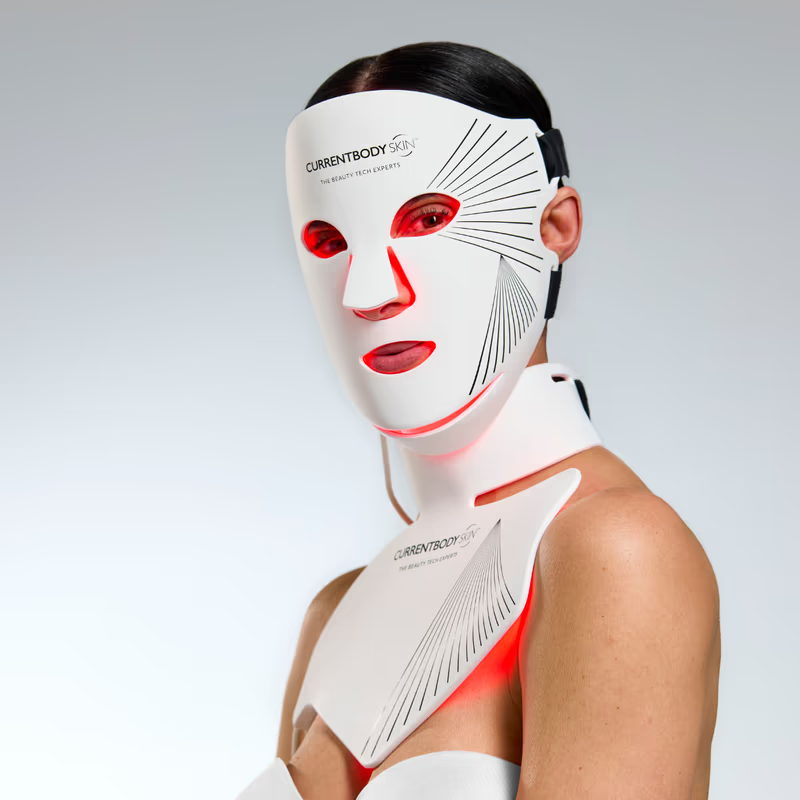
Professional LED Face Masks and Light Therapy Panels use selected wavelengths of light rather than RF energy.
Red and near-infrared wavelengths are commonly incorporated into broader skin rejuvenation programmes.
LED may therefore complement lower-face and neck skincare programmes, but clinics should not describe LED therapy as though it provides exactly the same mechanism as RF tightening.
Read RF vs LED Therapy – Which Skin Treatment Is Better? for a full comparison of the two technologies.
Jawline Skin Tightening and the Neck
The jawline and neck are closely connected from an aesthetic perspective.
A client may initially ask for a sharper-looking jawline but also have concerns about reduced firmness below the jaw.
Treating only a small part of the lower face may therefore fail to address the client’s overall concern, non-surgical jawline tightening.
A professional assessment can consider:
- Lower face
- Jawline
- Under-jaw area
- Neck
- Overall skin condition
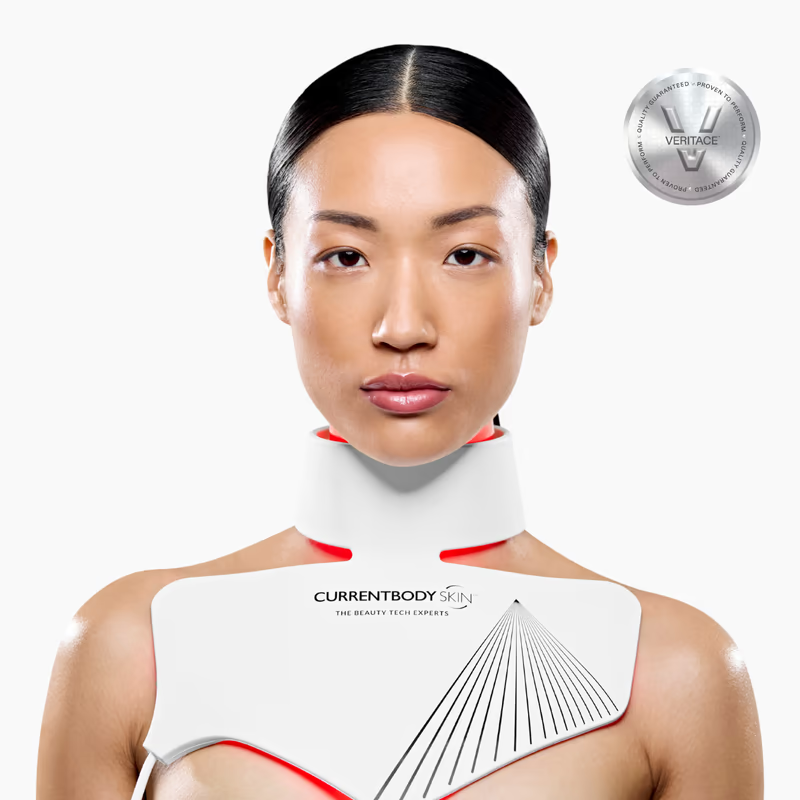
A dedicated Neck Skin Tightening Device may help clinics develop services that extend beyond standard facial treatments.
Our Neck Skin Tightening Treatments UK – Professional Clinic Guide explains these treatment options in more detail.
Face and Neck Rejuvenation Programmes
Clinics can create treatment packages that address the face and neck together where appropriate.
Possible services might include:
- RF facial treatment
- RF lower-face treatment
- RF face and neck programme
- Jawline and neck rejuvenation
- RF microneedling where suitable
- LED facial treatments
- LED face and neck programmes
This approach can be more logical than treating the jawline as an isolated strip of skin, loose skin around jawline.
However, treatment areas should still be based on individual client needs.
What Results Can Clients Expect?
Results vary.
A professional clinic should never guarantee a perfectly sculpted jawline from a non-surgical machine, loose skin around jawline.
Potential progress can depend on:
- Degree of skin laxity
- Age
- Skin condition
- Treatment technology
- Equipment
- Treatment settings
- Number of sessions
- Individual response
- Lifestyle
Some clients may be suitable for non-surgical programmes while others may have expectations beyond what these technologies can realistically provide.
This should be discussed before treatment begins.
How Quickly Can Results Appear?
Treatment timelines differ between technologies and clients.
Professional skin rejuvenation programmes are often structured as a course rather than being judged entirely after one appointment.
Clinics can monitor progress using:
- Consultation notes
- Consistent photography
- Client feedback
- Practitioner assessment
Before-and-after photographs should use similar lighting, distance and positioning, lower face skin tightening.
Artificially changing lighting or angles can create misleading impressions of jawline skin tightening results.
How Many Jawline Treatments Are Needed?
There is no universal number.
Treatment schedules depend on:
- Technology
- Equipment
- Manufacturer guidance
- Client condition
- Treatment goal
- Individual response
A standard RF programme may have a different schedule from RF microneedling, lower face skin tightening.
LED treatment frequency can also differ.
Practitioners should avoid applying the same timetable to every technology.
For light-based treatments, our LED Light Therapy Frequency – How Often Should You Use It? guide explains why treatment schedules matter.
Is Jawline Tightening the Same as a Facelift?
No.
This distinction should be very clear.
Non-surgical aesthetic technologies and surgical facelifts are fundamentally different.
Professional RF or RF microneedling should not be marketed as though a machine physically removes excess skin in the same way surgery can.
Clients with substantial laxity may have expectations that non-surgical equipment cannot meet, sagging jawline treatment.
Responsible consultation protects both the client and the clinic.
Jawline Tightening vs Facial Contouring
These terms are sometimes used interchangeably in marketing, but they can describe different objectives.
Skin tightening generally focuses on the appearance of firmness.
Facial contouring may refer more broadly to the shape and appearance of facial features.
A less defined jawline can be influenced by more than skin laxity alone.
Therefore, clinics should avoid suggesting that a skin-focused treatment will automatically restructure the entire lower face.
Clear terminology helps prevent unrealistic expectations, sagging jawline treatment.
Can Weight Loss Affect Jawline Skin?
Significant weight changes can influence facial and neck appearance.
Some clients may notice reduced skin firmness after weight loss.
However, the degree of change varies substantially between individuals.
Factors such as age, genetics, starting skin condition and the amount of weight change can all matter.
Clients experiencing significant laxity should receive realistic information about the limitations of non-surgical treatments.
What About Double Chin Concerns?
A double-chin appearance and loose jawline skin are not necessarily the same issue.
Skin laxity may contribute to the appearance of the area, but other factors can also be involved.
A practitioner should not assume that jawline skin tightening equipment addresses every under-chin concern.
This is another reason consultation is important before selling a treatment package.
Professional clinics should clearly explain what their equipment is intended to treat, sagging jawline treatment.
Can RF and LED Be Used in the Same Programme?
A clinic can offer both technologies within a wider rejuvenation menu where appropriate.
RF may be positioned around firmness-focused treatments.
LED may support broader light-based skin rejuvenation programmes.
The two technologies do not need to compete.
A treatment programme might include different services at different stages depending on the client’s goals and the manufacturer’s protocols.
Our RF vs LED Therapy guide explains how clinics can position both technologies clearly.
Jawline Treatments for Men
Men may also seek non-surgical lower-face and neck treatments.
Concerns can include:
- Reduced jawline definition
- Loose-looking neck skin
- Visible ageing
- Skin texture
- General facial rejuvenation
Treatment selection should still be based on individual assessment rather than gender-based assumptions, sagging jawline treatment.
Clinics offering consultations to both men and women can broaden the potential audience for professional facial rejuvenation services.
Choosing a Professional Jawline Treatment Machine
Clinic owners should evaluate equipment carefully before purchasing.
Consider the following:
Technology
Is the device RF, RF microneedling, LED or a multifunction system?
Treatment Areas
Can it safely and effectively be used for the areas your clinic wants to treat?
Treatment Controls
Understand what parameters practitioners can adjust.
Training
Ask what practitioner education is supplied.
Warranty
Check what the warranty covers and for how long.
Technical Support
Determine what happens if the machine develops a problem.
Replacement Parts
Ask whether handpieces, cables and other components can be replaced.
Our Professional Beauty Machines UK – Complete Guide for Modern Aesthetic Clinics provides a broader equipment-buying framework, non-surgical jawline tightening.
Is a Multifunction Beauty Machine Better?
Not automatically.
Multifunction systems can be attractive because they combine several technologies in one platform.
However, clinic owners should still investigate:
- Specifications of each function
- Treatment quality
- Training
- Reliability
- Maintenance
- Warranty
- Replacement parts
- Technical support
A machine offering ten poorly supported functions is not necessarily a better investment than a reliable system designed around the treatments clients actually request, non-surgical jawline tightening,
Building Jawline and Neck Treatment Packages
Clinics can make lower-face services easier to understand by organising packages around concerns rather than machine names alone.
For example:
Lower-Face Rejuvenation
A programme focused on visible ageing and skin appearance.
Jawline Firmness
A service designed around suitable firmness-focused technology.
Face and Neck Rejuvenation
A broader programme addressing connected treatment areas.
Advanced Rejuvenation
Where appropriate, RF microneedling may form part of the treatment plan.
Packages should remain flexible enough to reflect individual client suitability.
Treatment Pricing and Clinic Profitability
Before introducing jawline skin tightening, clinics should calculate the complete cost of providing the service.
Consider:
- Equipment cost
- Finance payments
- Practitioner time
- Appointment duration
- Consumables
- Maintenance
- Marketing
- Treatment room time
- Expected client demand
Then estimate how many appointments are required to recover the equipment investment.
Our Medical Spa Equipment Buying Guide – Essential Machines for UK Clinics explains how equipment decisions can be considered from both treatment and business perspectives, non-surgical jawline tightening.
Why Equipment Supplier Support Matters
The cheapest machine is not always the cheapest long-term investment.
Professional Beauty Equipment Suppliers UK should ideally provide clear information regarding:
- Machine specifications
- Training
- Warranty
- Technical assistance
- Replacement parts
- Maintenance
- Intended applications
Clinic owners should also investigate the manufacturer behind expensive equipment.
Read our Aesthetic Equipment Manufacturer – How to Choose the Right Partner for Your Beauty Clinic guide before making a major purchase.
Common Jawline Treatment Mistakes
Clinics should avoid:
- Guaranteeing a dramatically sharper jawline
- Promising facelift-equivalent results
- Assuming every jawline concern is loose skin
- Treating every client with identical settings
- Ignoring the neck during assessment
- Confusing RF and LED technologies
- Treating RF and RF microneedling as identical
- Using misleading before-and-after photography
- Ignoring contraindications
- Buying equipment without practitioner training
- Choosing a machine solely because it is inexpensive
Professional jawline skin tightening should be built around realistic treatment planning rather than exaggerated marketing, non-surgical jawline tightening.
Continue Learning
Continue exploring related RedLightBeautyTech.com guides:
👉 LED Light Therapy Frequency – How Often Should You Use It?
👉 Red Light Therapy vs LED Light Therapy – What Is the Difference?
👉 LED Light Therapy Before and After Guide
👉 LED Light Therapy for Skin Rejuvenation
👉 Best LED Light Therapy Machine for Beauty Clinics
👉 LED Light Therapy Panels UK – Professional Clinic Buying Guide
👉 Professional LED Face Masks UK – Complete Clinic Buying Guide
👉 Anti-Ageing Treatments That Actually Work
👉 Radio Frequency Skin Tightening UK – Complete Professional Clinic Guide
👉 RF Microneedling UK – Benefits, Results and Professional Clinic Guide
👉 Neck Skin Tightening Treatments UK – Professional Clinic Guide
👉 Professional Beauty Machines UK – Complete Guide for Modern Aesthetic Clinics
These guides allow visitors to move naturally from a specific concern such as jawline ageing into broader treatment comparisons and professional equipment research.
Authority Resource
For independent information about cosmetic procedures and points to consider before undergoing treatment:
Final Thoughts
Interest in jawline skin tightening is understandable because changes around the lower face can significantly affect how facial ageing is perceived.
However, a softer-looking jawline does not always have one simple cause.
When reduced skin firmness is part of the concern, professional radio frequency may be incorporated into a non-surgical treatment programme. RF microneedling may be considered where suitable clients also have concerns involving texture and more advanced rejuvenation. LED light therapy works differently but can complement a wider skincare programme.
The neck should also be considered when assessing the lower face because these areas are visually connected.
Most importantly, clinics should avoid promising surgical-level transformations from non-surgical equipment.
Successful treatment planning begins with understanding the client’s concern, selecting appropriate technology, following professional protocols and setting realistic expectations.
For beauty clinics, developing dedicated lower-face, jawline and neck services can also create a valuable extension to an existing anti-ageing treatment menu without relying on exaggerated claims.
Frequently Asked Questions
What is the best treatment for a loose-looking jawline?
There is no single best treatment for everyone. Radio frequency is commonly incorporated into firmness-focused programmes, while RF microneedling may be considered where concerns also involve skin texture. Treatment suitability should be assessed individually.
Can radio frequency tighten the jawline?
Professional radio frequency is commonly used in non-surgical programmes focused on the appearance of skin firmness around the face and neck. Results vary according to the individual, equipment and treatment programme.
Is RF microneedling suitable for the jawline?
RF microneedling may be used for suitable clients when treatment goals involve firmness, texture and other visible signs of ageing. Professional assessment and appropriate practitioner training are important.
Can LED light therapy improve the jawline?
LED light therapy may support broader skin rejuvenation programmes, but it works differently from radio frequency. Clinics should not present LED as though it provides the same mechanism as RF skin-tightening technology.
How long do jawline skin tightening results last?
There is no universal duration. Results and maintenance needs vary according to the technology, client’s skin condition, ageing, lifestyle and individual response. Clinics should explain that non-surgical treatments do not permanently stop the natural ageing process.