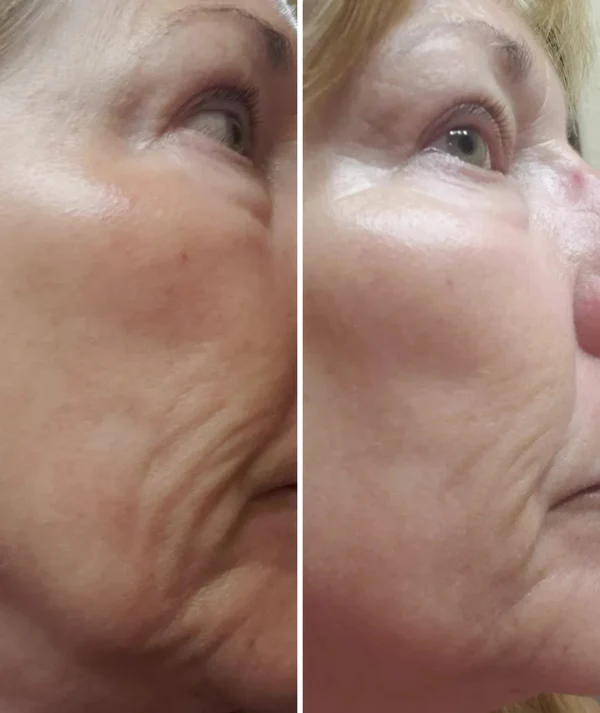
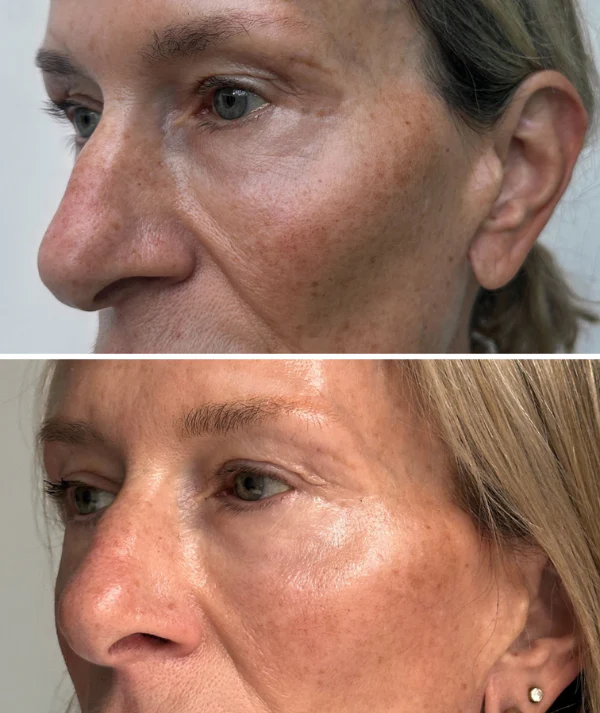
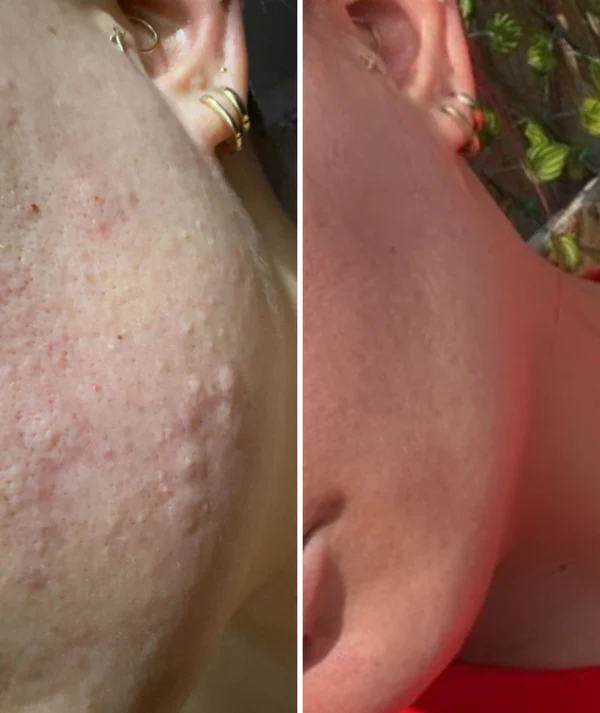


Changes in skin firmness are a common concern as people age. The face may appear less firm, the jawline can become less defined and the neck may begin to show visible changes that were less noticeable earlier in life.
This has increased interest in professional loose skin treatment options that do not involve surgery.
Modern beauty and aesthetic clinics can offer technologies such as radio frequency, RF microneedling and complementary LED light therapy as part of wider rejuvenation programmes. However, each technology works differently, and realistic expectations are essential.
Non-surgical treatments cannot simply reproduce the results of a surgical facelift or neck lift, loose facial skin treatment.
Instead, the aim is to select an appropriate technology according to the client’s skin, degree of laxity, treatment goals and suitability.
This guide explains why skin becomes less firm, compares popular professional options and explores how UK clinics can develop responsible face, jawline and neck rejuvenation programmes.
Why Does Skin Become Loose?
Skin contains structural components including collagen and elastin that contribute to its appearance and elasticity.
Natural ageing can gradually affect these structures.
Visible changes may also be influenced by:
- Sun exposure
- Genetics
- Weight fluctuations
- Lifestyle
- Smoking
- Environmental exposure
- Skincare habits
- Natural facial changes with age
The degree of laxity varies significantly between individuals.
Someone experiencing early changes in facial firmness may have very different treatment expectations from a client with more significant loose skin.
For this reason, choosing a loose skin treatment should begin with consultation rather than selecting a machine based only on advertising, loose facial skin treatment.
Which Areas Commonly Lose Firmness?
Skin laxity can become noticeable in several areas.
Lower Face
Changes around the cheeks and lower face may alter overall facial appearance.
Jawline
Reduced firmness can make the jawline appear less defined.
Neck
The neck is particularly important because clients sometimes concentrate their skincare on the face while neglecting the neck.
Décolletage
The upper chest can also develop visible signs of ageing and sun exposure.
A clinic offering rejuvenation services should therefore consider more than facial treatments alone.
Can Loose Skin Be Tightened Without Surgery?
Non-surgical aesthetic technologies can be incorporated into programmes designed around the appearance of skin firmness.
However, the word “tightening” needs realistic interpretation.
Professional treatments should not be presented as equivalent to removing excess skin surgically.
The suitability of a non-surgical loose skin treatment depends partly on the severity of the concern.
Clients with mild or moderate changes may have different expectations from someone with substantial skin laxity.
A responsible practitioner should explain these limitations before treatment begins.
Radio Frequency for Loose-Looking Skin
Radio frequency is one of the most established technologies associated with professional non-surgical skin tightening.
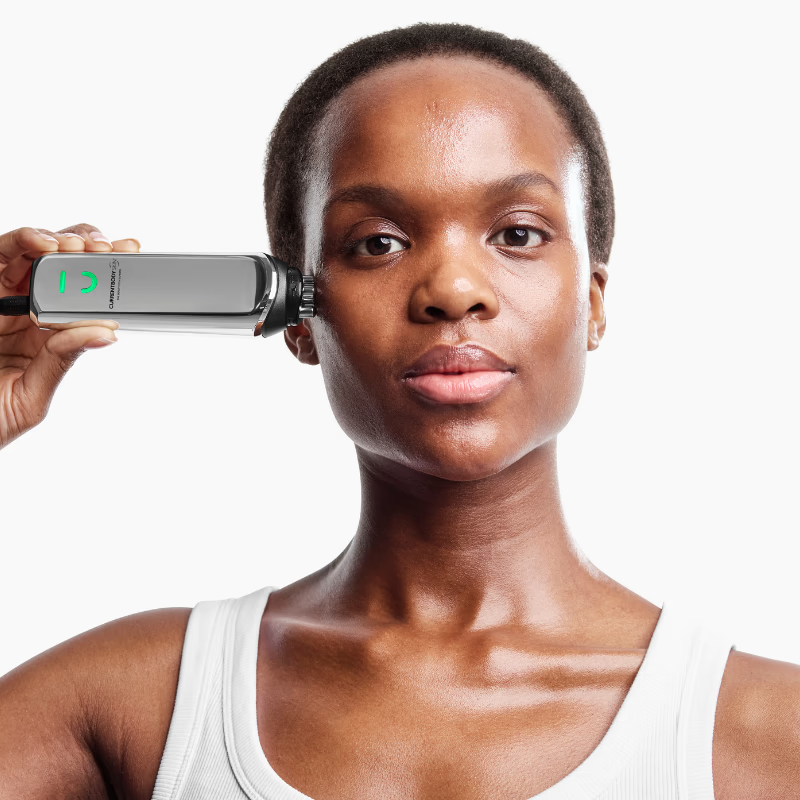
Professional Radio Frequency equipment delivers RF energy to targeted tissue, producing controlled thermal effects according to the machine and treatment protocol.
RF treatments are commonly incorporated into programmes focused on:
- Facial firmness
- Lower-face rejuvenation
- Jawline appearance
- Neck rejuvenation
- Visible signs of ageing
Unlike LED light therapy, RF does not rely on visible light wavelengths.
The technology, treatment parameters and practitioner technique all matter, loose facial skin treatment.
For a detailed explanation, read our Radio Frequency Skin Tightening UK – Complete Professional Clinic Guide.
How Does RF Skin Tightening Work?
Radio frequency technology uses electromagnetic energy.
Professional treatment systems are designed to create controlled heating within targeted tissue.
Because thermal effects form part of the treatment mechanism, practitioners need to understand their equipment rather than simply moving a handpiece across the skin without a clear protocol.
Important considerations include:
- Energy settings
- Treatment temperature
- Treatment time
- Applicator movement
- Treatment area
- Client comfort
- Contraindications
- Manufacturer instructions
A professional loose skin treatment programme should always be based on the actual equipment being used.
RF Microneedling for Skin Laxity and Texture
RF microneedling combines controlled microneedling with radio frequency energy.
Professional RF Microneedling systems use specialised needles that enter the skin at selected depths while RF energy is delivered according to the treatment settings, non-surgical loose skin treatment.
The technology may be considered where clients have multiple concerns such as:
- Reduced firmness
- Uneven texture
- Fine lines
- Visible ageing
- Certain types of scarring
Because RF microneedling is more invasive than external radio frequency or LED treatment, practitioner competence and client selection are especially important.
Clinics should also provide appropriate aftercare information.
Read our RF Microneedling UK – Benefits, Results and Professional Clinic Guide for a deeper comparison.
Radio Frequency vs RF Microneedling
Although both technologies use radio frequency energy, they should not be confused.
Standard RF
Standard professional RF generally delivers energy externally without microneedles penetrating the skin.
It is commonly incorporated into non-invasive firmness-focused programmes.
RF Microneedling
RF microneedling uses controlled needle penetration combined with RF energy.
It may therefore be selected where treatment goals extend beyond general firmness to include concerns such as texture.
The appropriate loose skin treatment depends on the client’s condition and desired outcome rather than which machine appears more advanced, non-surgical loose skin treatment.
Can LED Light Therapy Help Ageing Skin?
LED light therapy works differently from RF.
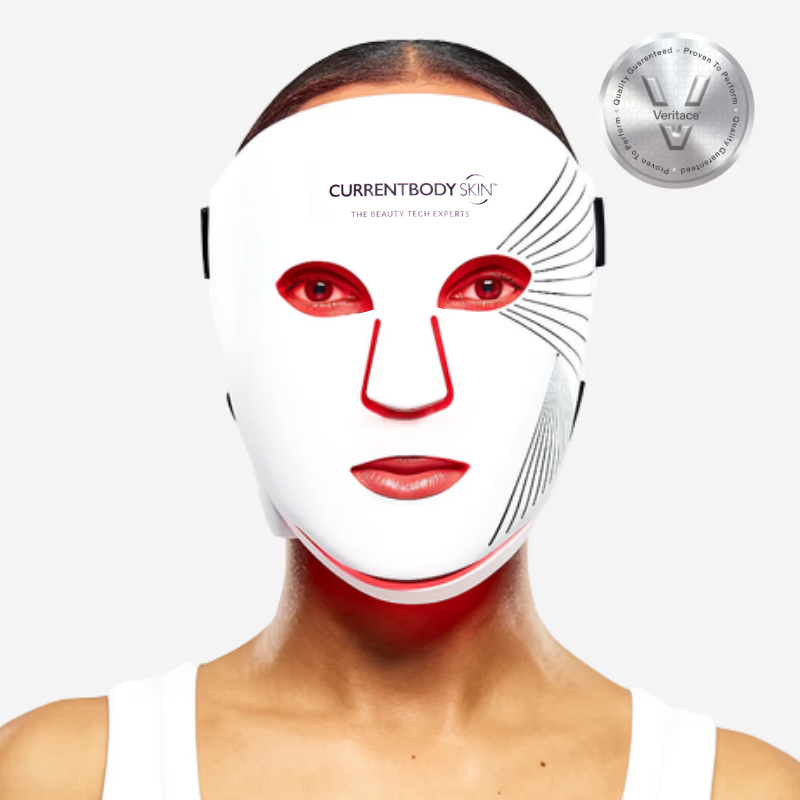
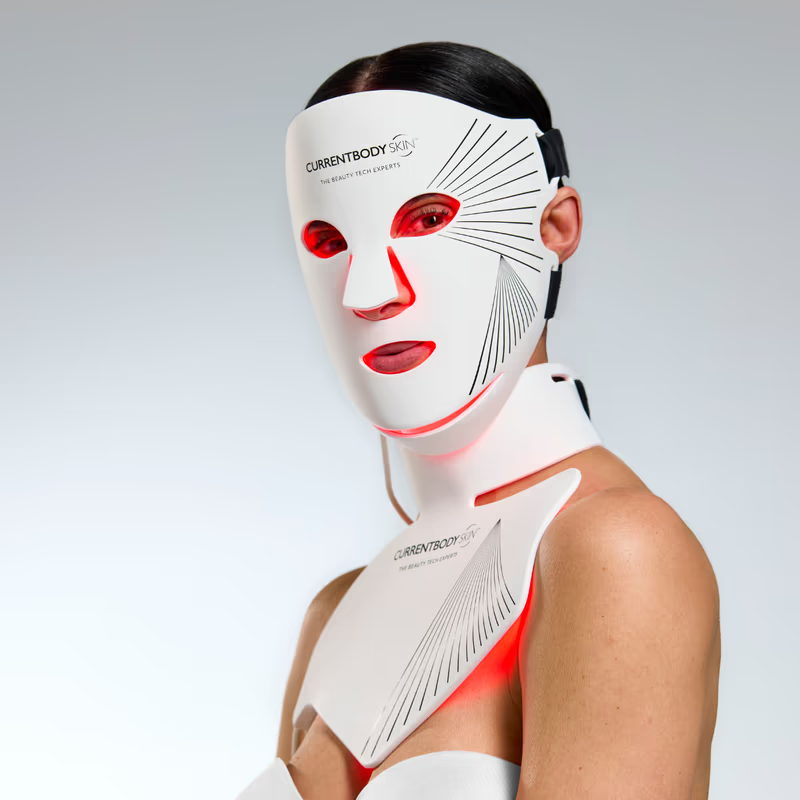
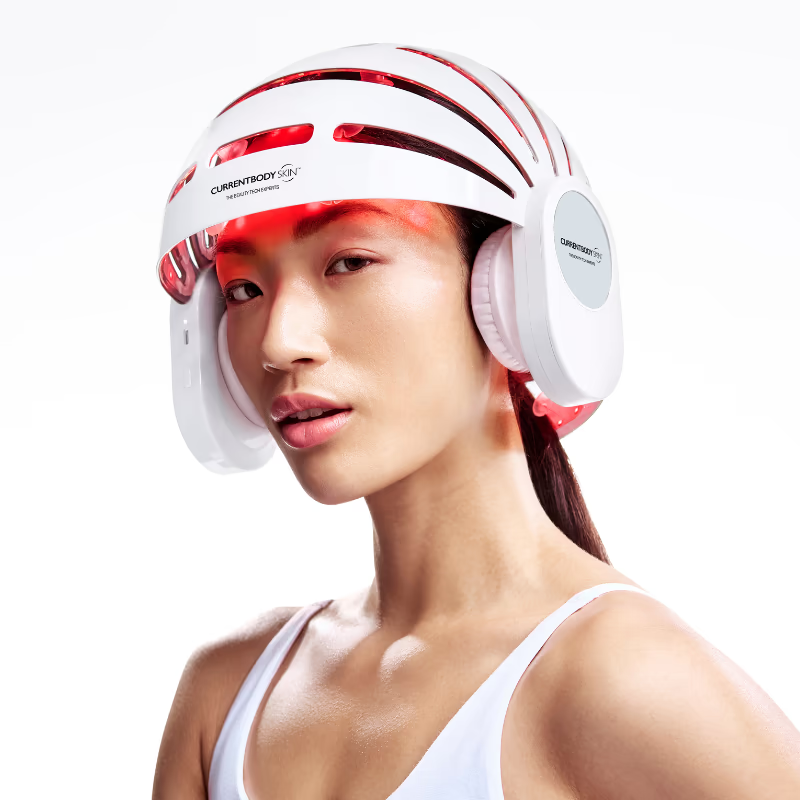
Professional LED Face Masks and Light Therapy Panels deliver selected wavelengths of light towards the skin.
Red and near-infrared wavelengths are commonly incorporated into professional skin rejuvenation programmes.
LED therapy may therefore complement services for clients concerned about general visible ageing and skin appearance.
However, clinics should avoid telling clients that LED provides exactly the same type of treatment as radio frequency.
Our RF vs LED Therapy – Which Skin Treatment Is Better? guide explains the difference between these technologies.
Is LED a Skin Tightening Treatment?
LED therapy is better understood as a light-based skin rejuvenation technology rather than simply being labelled an alternative RF tightening machine.
This distinction improves client expectations.
A clinic might use LED within a broader rejuvenation programme while using RF for services more directly focused on firmness.
Professional treatment planning should consider the client’s overall concerns rather than trying to make one technology perform every role.
Read LED Light Therapy for Skin Rejuvenation to understand how professional light treatments can fit into aesthetic programmes, loose skin treatment.
Loose Skin Treatment for the Face
Facial laxity can appear differently between clients.
Some may be primarily concerned with the cheeks, while others notice changes around the lower face or jawline.
A facial consultation can consider:
- Main area of concern
- Degree of laxity
- Skin condition
- Previous treatments
- Desired outcome
- Available downtime
- Treatment suitability
Radio frequency may form part of a firmness-focused facial programme.
RF microneedling may be considered where texture and other rejuvenation concerns are also relevant.
LED can complement a wider skincare programme where appropriate.
What Can Help a Less Defined Jawline?
The jawline is one of the most frequently discussed areas in non-surgical rejuvenation.
However, not every change in jawline appearance is caused solely by loose skin.
Facial structure, fat distribution, skin condition and ageing can all influence appearance.
This means a professional consultation is important before recommending treatment.
Where skin firmness is a relevant concern, radio frequency may form part of the treatment plan.
Practitioners should avoid guaranteeing dramatic jawline reshaping from a non-surgical device, loose skin treatment.
Loose Skin Treatment for the Neck
The neck often shows visible ageing differently from the face.
Clients may notice:
- Reduced firmness
- Fine lines
- Creasing
- Texture changes
- Less definition around the jaw and neck
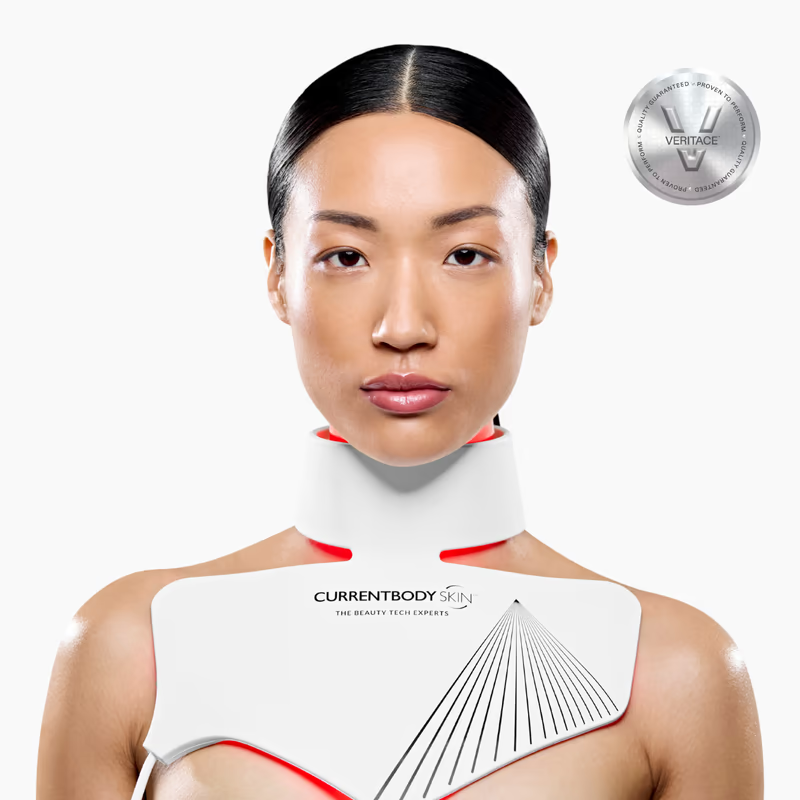
A professional neck programme may incorporate radio frequency, suitable RF microneedling treatments, LED therapy or a combination of appropriately scheduled services.
A dedicated Neck Skin Tightening Device can also allow clinics to expand their services beyond facial rejuvenation.
Our Neck Skin Tightening Treatments UK – Professional Clinic Guide covers this area in greater detail.
Face and Neck Treatment Programmes
Treating the face while ignoring the neck can sometimes create an incomplete rejuvenation programme.
For suitable clients, clinics can create face-and-neck services rather than treating the two areas as entirely unrelated.
A treatment menu could include:
- RF face treatment
- RF face and neck treatment
- Neck rejuvenation
- LED facial
- LED face and neck treatment
- RF microneedling where suitable
- Maintenance programmes
Packages should still be based on individual assessment rather than applying every technology during every appointment.
Which Treatment Is Best for Loose Skin?
There is no universal answer.
For firmness-focused services, professional radio frequency may be considered.
For clients whose concerns also involve texture, RF microneedling may be an option where appropriate.
LED light therapy can support broader rejuvenation programmes but works differently from RF technologies.
The best loose skin treatment depends on factors such as:
- Degree of laxity
- Treatment area
- Client age
- Skin condition
- Desired result
- Tolerance for downtime
- Treatment history
- Practitioner assessment
This is why consultation is more valuable than choosing a treatment simply because it is trending online.
What Results Are Realistic?
Clients should understand that non-surgical technology has limitations.
Results vary between individuals and may depend on:
- Starting skin condition
- Age
- Treatment type
- Equipment
- Treatment parameters
- Number of sessions
- Treatment consistency
- Lifestyle
- Individual response
Some programmes are designed around gradual improvements rather than an immediate dramatic change.
Clinics should avoid guarantees such as “10 years younger after one session” or “same results as surgery”.
Realistic communication builds greater trust.
How Many Sessions May Be Required?
There is no single treatment schedule suitable for every person.
The number and frequency of sessions depend on:
- Equipment
- Manufacturer protocol
- Treatment objective
- Client response
- Practitioner assessment
A structured treatment course may be recommended in some situations, followed by maintenance where appropriate.
The treatment schedule for RF should not automatically be copied to RF microneedling or LED because these technologies operate differently.
When Is Non-Surgical Treatment Not Enough?
This is an important part of responsible client education.
Clients with significant laxity may expect a level of lifting that non-surgical aesthetic equipment cannot realistically provide.
In these situations, clinics should not exaggerate what their equipment can achieve simply to make a sale.
Non-surgical treatments and surgical procedures are different categories.
A professional consultation should establish realistic expectations before the client invests money in a treatment programme.
Loose Skin vs Wrinkles – Are They the Same?
No.
Skin laxity and wrinkles can occur together, but they are not identical concerns.
Loose-looking skin relates more closely to changes in firmness and support, while wrinkles involve visible lines and folds.
A client may also have additional concerns such as:
- Uneven texture
- Pigmentation
- Dullness
- Blemishes
- Redness
This is why modern rejuvenation programmes may involve different technologies rather than relying on a single machine.
Combining RF and LED Treatments
A clinic offering both RF and LED can position them differently within the treatment menu.
For example:
RF: firmness-focused rejuvenation.
LED: light-based skin rejuvenation and maintenance.
The technologies can exist within the same overall programme where appropriate, but this does not mean they should always be performed together.
Treatment timing should follow professional protocols and individual client needs.
Our RF vs LED Therapy comparison explains the differences in greater detail.
Choosing Professional Equipment
Clinic owners planning to introduce a loose skin treatment should investigate the equipment carefully before purchasing.
Consider:
Technology
Understand whether the system uses RF, microneedling, LED or multiple technologies.
Treatment Areas
Check whether the machine is intended for the face, neck or additional areas.
Controls
Professional equipment should provide appropriate treatment controls for its intended use.
Training
Practitioners should understand how to operate the technology correctly.
Warranty
Check the length and terms of equipment coverage.
Technical Support
Ask what happens if the machine develops a fault.
Replacement Parts
Confirm whether handpieces, cables or other components remain available.
Our Professional Beauty Machines UK – Complete Guide for Modern Aesthetic Clinics explains how to compare professional systems.
Why Supplier Quality Matters
Buying professional aesthetic equipment should involve more than comparing prices.
Reliable Beauty Equipment Suppliers UK should be able to explain:
- Equipment specifications
- Intended applications
- Training
- Warranty
- Technical assistance
- Maintenance
- Replacement parts
- After-sales support
A cheap machine can become expensive if the clinic cannot obtain support when something goes wrong.
For larger equipment investments, read our Aesthetic Equipment Manufacturer – How to Choose the Right Partner for Your Beauty Clinic guide.
Building a Profitable Skin Rejuvenation Menu
Professional equipment should support a clear business model.
Before investing, calculate:
- Equipment purchase price
- Treatment price
- Average appointment time
- Practitioner cost
- Consumables
- Expected monthly treatments
- Maintenance costs
- Potential treatment packages
For example, clinics may create separate:
- Face treatments
- Jawline treatments
- Neck treatments
- Face and neck packages
- Rejuvenation courses
- Maintenance programmes
This can provide clients with clearer choices while helping the clinic understand the commercial potential of its equipment.
Common Mistakes to Avoid
Clinics should avoid:
- Promising surgical results from non-surgical technology
- Recommending the same treatment to every client
- Purchasing equipment without researching demand
- Ignoring practitioner training
- Confusing RF with LED therapy
- Treating standard RF and RF microneedling as identical
- Ignoring the neck during facial rejuvenation planning
- Using exaggerated before-and-after photographs
- Guaranteeing a specific outcome
- Choosing a supplier solely because it offers the lowest price
A professional loose skin treatment service should combine suitable equipment with responsible consultation and realistic communication.
Continue Learning
Explore these related RedLightBeautyTech.com guides:
👉 LED Light Therapy Frequency – How Often Should You Use It?
👉 Red Light Therapy vs LED Light Therapy – What Is the Difference?
👉 LED Light Therapy Before and After Guide
👉 LED Light Therapy for Skin Rejuvenation
👉 Best LED Light Therapy Machine for Beauty Clinics
👉 LED Light Therapy Panels UK – Professional Clinic Buying Guide
👉 Professional LED Face Masks UK – Complete Clinic Buying Guide
👉 Anti-Ageing Treatments That Actually Work
👉 Radio Frequency Skin Tightening UK – Complete Professional Clinic Guide
👉 RF Microneedling UK – Benefits, Results and Professional Clinic Guide
👉 Neck Skin Tightening Treatments UK – Professional Clinic Guide
👉 Professional Beauty Machines UK – Complete Guide for Modern Aesthetic Clinics
These guides help visitors move naturally from their skin concern to treatment comparisons and then towards the appropriate professional technology.
Authority Resource
For independent information about cosmetic procedures, including considerations before choosing non-surgical treatments, refer to:
Final Thoughts
Choosing a loose skin treatment starts with understanding the client’s actual concern rather than selecting whichever aesthetic technology is currently most popular.
Radio frequency is commonly incorporated into professional programmes focused on skin firmness. RF microneedling combines controlled microneedling with RF energy and may suit clients whose rejuvenation goals also involve texture. LED light therapy operates differently and can complement wider skin maintenance and rejuvenation programmes.
The face, jawline and neck should also be considered individually.
Most importantly, non-surgical treatments should be presented realistically. They cannot simply reproduce the effects of surgical lifting, and results vary according to the individual, equipment and treatment programme.
For UK beauty clinics, a strong service combines professional equipment, practitioner knowledge, careful client selection and clear expectations.
Rather than promising dramatic transformations, focus on appropriate treatment planning and measurable progress.
That approach can help clinics build stronger client trust while creating a more professional long-term rejuvenation service.
Frequently Asked Questions
What is the best loose skin treatment without surgery?
There is no single best option for everyone. Radio frequency is commonly incorporated into firmness-focused programmes, while RF microneedling may be considered when concerns also involve texture. The appropriate treatment depends on individual assessment.
Can radio frequency help loose-looking facial skin?
Professional radio frequency is widely used within non-surgical programmes focused on the appearance of skin firmness. Outcomes vary between individuals and depend on the equipment, protocol and client’s starting condition.
What treatment can be used for loose skin on the neck?
Professional neck programmes may include radio frequency, RF microneedling where appropriate and complementary LED treatments. The best option depends on the degree of laxity and individual suitability.
Is RF microneedling better than standard RF?
Neither is automatically better. Standard RF and RF microneedling work differently and may be selected for different treatment objectives. RF microneedling is more invasive because controlled needles enter the skin.
Can LED therapy be combined with a loose skin treatment programme?
LED light therapy may form part of a wider rejuvenation programme where appropriate. It uses selected wavelengths of light and should be positioned differently from RF-based tightening technologies.